Vintage jewelry can hold delicate finishes, tiny foil-backed stones, and old repairs that are easy to overlook. A quick dip in hot water or a scrub with a stiff brush may loosen settings or dull a surface. How to clean vintage jewelry without damaging the finish begins with identifying the piece, not reaching for a cleaner. Check for loose stones, worn plating, darkened details, and fragile components before touching it.
Gem and jewelry expert Antoinette Matlins is a respected author on gems and jewelry care. A cautious principle consistent with expert guidance—and expressed here as a paraphrase, not a direct quotation—is: “Know the materials before choosing how to clean them.” That distinction matters. A sturdy gold band may tolerate gentle washing, while pearls, glued stones, or foil-backed gems may need a dry, soft cloth and professional attention. When uncertain, stop. That is often the safer choice.
This guide introduces ten careful cleaning methods, from dusting with a soft brush to using a barely damp cloth on suitable pieces. It also explains when to avoid soaking, ultrasonic cleaners, household chemicals, and vigorous polishing. Look for specific details: a loose prong, green residue near a clasp, or a cloudy stone can signal a problem that cleaning will not fix. No single method suits every vintage piece. Even careful cleaning can reveal damage—or cause it—so take a moment to reassess before continuing.
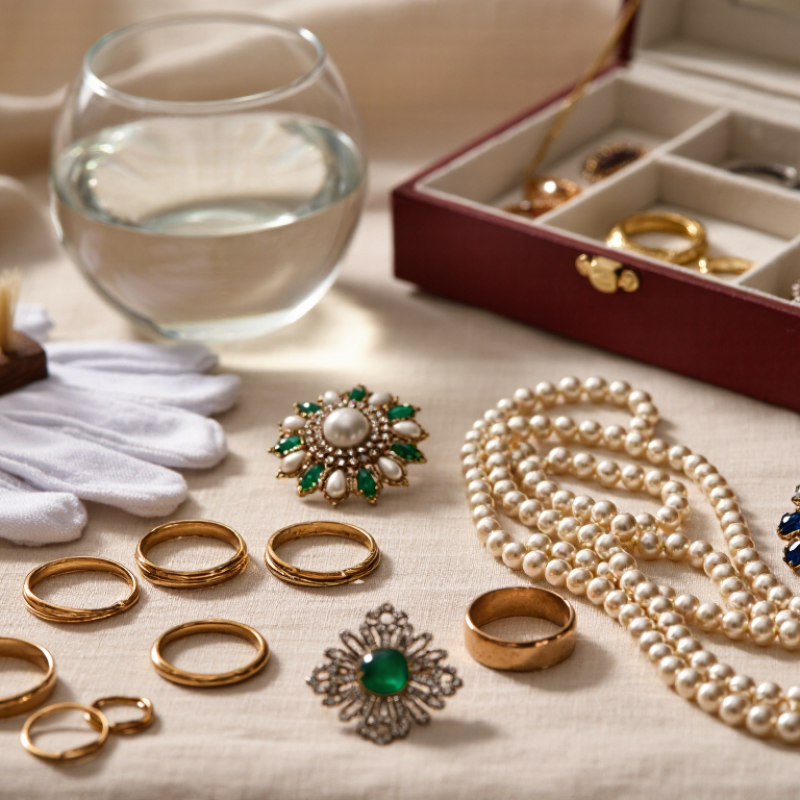
Before cleaning vintage jewelry, identify each metal and gemstone; a single piece may combine silver, gold, enamel, and glued stones. Check hallmarks and inspect settings under bright light, but remember that old marks can be worn or misleading. The Gemological Institute of America (GIA) rates pearl hardness at Mohs 2.5–4.5, compared with quartz at 7. That gap matters: pearls can scratch against harder stones, even during gentle handling. A soft touch matters. Keep them separate on a padded cloth, and avoid ultrasonic cleaners, steam, and prolonged soaking.
Use a barely damp, soft cloth for pearls, then let them air-dry fully before storage. GIA’s gemstone-care guidance also warns that heat and chemicals can harm pearls; perfume, hairspray, and household cleaners are common risks. For metal, choose cleaning only after identifying the alloy and checking whether stones are secure. A mild soap solution may suit some sturdy settings, but it is not a universal remedy. The Canadian Conservation Institute’s preventive-care guidance favors minimal, controlled cleaning for fragile objects—a useful principle for heirlooms, too. If a piece has flaking foil, loose claws, or unknown coatings, pause and consult a qualified conservator. I would not assume a familiar-looking stone is glass. That uncertainty is worth respecting.
Mohs hardness ranges are shown for common jewelry materials; bars mark each range’s midpoint. Pearl hardness is approximately 2.5–4.5. Hardness alone does not determine cleaning safety: pearls, coral, amber, and porous or treated stones can be sensitive to water, chemicals, heat, or abrasion. Identify each material before cleaning, and avoid soaking or using steam or ultrasonic cleaners unless its care requirements are known.
Before cleaning vintage jewelry, remove loose dust with a clean, very soft brush. A small artist’s brush can reach around settings and engraved details. Work over a folded towel, and hold the piece close to the surface. This helps catch a stone if it shifts. Use light strokes; dust may contain grit that can scratch polished metal or softer stones when rubbed. Keep it dry. Do not blow on the piece, since breath can leave moisture behind.
Brush gently from the center outward, without pressing bristles under stones, clasps, or delicate prongs. Pay attention to tiny corners where dust collects, but do not force the brush into tight gaps. If a stone moves, a setting feels sharp, or the surface sheds flakes, stop and ask a qualified jewelry conservator to assess it. Stop there. An old brooch may have foil backing, glued parts, or a fragile finish that is hard to identify by sight. Removing dust first is a cautious start, not proof that water or cleaner is safe. I sometimes find this step slower than expected, but rushing can turn a simple cleaning into a repair.
Vintage jewelry can hide fragile parts beneath a polished surface. Use mild, fragrance-free soap diluted in lukewarm water only when the setting is secure and the materials are known to tolerate moisture. Dip a soft cloth, wring it nearly dry, then wipe gently around the metal. Keep it brief.
A quick rinse may remove soap from sturdy gold or platinum settings with firmly held, water-safe stones. Hold the piece over a bowl, not an open sink, and avoid directing water into hinges or tiny crevices. Never soak old jewelry. Pearls, opals, turquoise, foil-backed stones, and pieces with glued components can be harmed by moisture. If a stone shifts, or you see a crack, skip water entirely.
Pat the piece dry with a clean, lint-free cloth, including the spaces around the setting. Let it air-dry fully before storing it in a dry place. A soft brush can help with accessible dirt, but pressure may loosen aged prongs; gentle is not always gentle enough. When uncertain, stop. A qualified jeweler can assess fragile settings before cleaning, especially when the piece has sentimental or monetary value.
Pearls and opals need gentler care than diamonds. GIA’s gem reference lists pearl hardness at 2.5–4.5 on the Mohs scale and opal at 5–6.5. These figures describe scratch resistance, not toughness, so they are not a cleaning permission slip. Ultrasonic vibration can loosen aged settings or damage delicate surfaces. Steam adds heat and moisture, which can stress sensitive gems and old adhesives. Less is safer.
For a pearl strand, wipe each bead with a soft, barely damp cloth, then dry it before storing. Keep the strand away from prolonged soaking; silk or other thread may weaken with age. For opals, use a soft cloth and a little lukewarm water only when needed. Skip household cleaners, sudden temperature changes, and stiff brushes. That restraint can feel excessive. With vintage pieces, uncertainty is a reason to pause.
Inspect the setting under good light before cleaning. If a stone moves, a prong catches fabric, or the mount has visible cracks, do not scrub or rinse it. A jeweler experienced with antique pieces can assess the construction and choose a safer method. Avoid ultrasonic and steam cleaning for pearls, opals, and fragile mounts, even when the surrounding metal looks sturdy. GIA’s hardness figures are useful context, but they cannot reveal hidden repairs or weakened settings.
After cleaning, let each piece air-dry completely on a soft, lint-free cloth. Turn it gently so water does not remain beneath stones, in hinges, or behind settings. Avoid hair dryers and direct sunlight; heat can stress older materials and loosen adhesives. Before storage, inspect prongs and bezels under good light. If a stone shifts, stop handling the piece and ask a qualified jeweler to assess it. GIA’s gemological reference lists pearl hardness at 2.5–4.5 on the Mohs scale, a reminder that some vintage materials scratch easily. Hardness is not the same as toughness, either. It can feel fussy, but a few extra minutes matter.
Tips: Pat dry, then leave the piece undisturbed until every crevice feels dry. Check clasps and settings before putting it away. Skip cleaning methods you cannot identify as safe for that specific material.
Store each item separately in a soft pouch or a divided compartment. Chains need room to lie flat; dangling charms can catch on other pieces. Keep jewelry away from damp bathrooms and sunny windows. A dry drawer is usually better. If you use a lined box, check that the lining is clean and not shedding fibers. Separate storage reduces rubbing, but it cannot prevent every scratch, so inspect pieces occasionally.
One piece may combine silver, gold, enamel, and glued stones. Check hallmarks and settings under bright light, but old marks can be worn or misleading.
Wipe them with a barely damp, soft cloth, then let them air-dry fully. Keep them dry. Avoid heat, chemicals, soaking, steam, and ultrasonic cleaners.
Pearls have a Mohs hardness of about 2.5–4.5, while quartz is 7. Harder stones can scratch them, even with gentle contact.
Use a clean, very soft brush, such as a small artist’s brush. Work over a folded towel and use light strokes. Do not blow on the piece.
No. It may suit some sturdy settings, but it is not universal. Unknown coatings, glued parts, or flaking foil need extra caution. I would pause.
Stop handling the piece and have a qualified jewelry conservator assess it. Do not press the stone back into place.
Pat it gently, then leave it on a soft, lint-free cloth until every crevice is dry. Avoid hair dryers and direct sunlight.
Store each item in a soft pouch or divided compartment. Let chains lie flat, and keep pieces away from damp bathrooms and sunny windows. Check the storage lining for loose fibers.
How to clean vintage jewelry without damaging the finish begins with identifying the metals and gemstones, since different materials need different care. Pearls are especially delicate: their Mohs hardness is only 2.5–4.5, so they can scratch easily. Before applying any cleaner, gently remove loose dust with a soft brush, taking care around settings and intricate details.
Use mild soap and a brief rinse only when the stones are secure and the setting can safely get wet. Avoid ultrasonic cleaners and steam, particularly for pearls, opals, and fragile mounts, as heat and vibration may cause damage. After cleaning, air-dry each piece completely and check that its stones and settings remain secure. Store vintage jewelry separately to prevent pieces from rubbing against one another and causing scratches. When the materials or setting are uncertain, choose the gentlest approach and avoid soaking or vigorous scrubbing.
