When shopping for jewelry, many people encounter terms like "gold plated" and "gold filled." These phrases can be confusing. Understanding what is the difference between gold plated and gold filled is crucial for making an informed purchase. Both types of jewelry provide the allure of gold but differ in quality, durability, and price.
Gold plated items feature a thin layer of gold over a base metal, often copper or brass. This layer can wear off quickly with regular use. On the other hand, gold filled jewelry has a thicker layer of gold, making it more durable. It contains 5% or more gold by weight, which gives it a longer-lasting finish. Many customers may not realize this difference until they notice their jewelry tarnishing.
Additionally, the perception of quality varies. Some may view gold plated items as less desirable due to their vulnerability. Others appreciate them for being cost-effective fashion accessories. It’s essential to weigh these factors. Ultimately, knowing what is the difference between gold plated and gold filled will help buyers choose wisely, avoiding disappointment later.
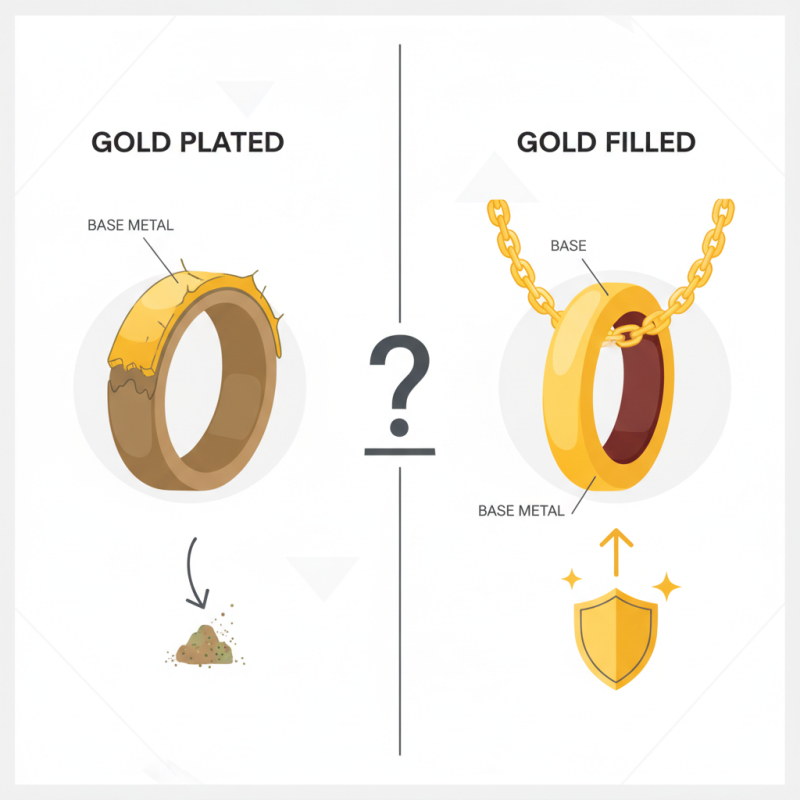
Understanding Gold Plated and Gold Filled: Definitions Explained
Gold plated and gold filled are two popular terms in the jewelry industry, but they mean different things. Gold plating is a thin layer of gold applied over a base metal. It typically contains 0.05% or less gold by weight. In contrast, gold filled includes a thicker layer, typically at least 5% of the total weight. It is bonded to the base metal, making it more durable and long-lasting.
In terms of wear and maintenance, gold filled jewelry can withstand daily use better than gold plated items. Industry reports suggest that gold filled pieces can last for years with proper care. Gold plated items, however, may tarnish more quickly and can wear off, exposing the underlying metal. Buyers should be aware of these differences to make informed choices.
Tip: When purchasing jewelry, always check the specifications. Look for karat marks and other indicators of quality. This ensures you know what you are buying.
Another consideration is skin sensitivity. Gold filled tends to be more hypoallergenic compared to gold plated. For those with allergies, this can be a crucial factor. It's also important to consider how often the jewelry will be worn. Occasional wear may work well for gold plated, but daily wear needs the resilience of gold filled.
The Composition of Gold Plated vs Gold Filled Jewelry
When it comes to jewelry, understanding the differences between gold plated and gold filled is crucial. Gold plated items consist of a thin layer of gold applied over a base metal. This layer is often just a few microns thick. According to industry reports, this means that over time, the gold layer can wear off, leading to a loss of luster. Gold filled jewelry, on the other hand, contains much more gold. Specifically, it is made with a thicker layer of gold bonded to a base metal, which can be 5% or more of the item's total weight. This results in a more durable option that can withstand daily wear better than gold plated jewelry.
The composition is what truly sets these two types apart. Gold plating typically utilizes a mechanical process, while gold filling involves heat and pressure to bond the gold layer. This means gold filled pieces can last years without significant wear, while gold plated may require more frequent replacement. Some reports indicate that consumers often prefer gold filled jewelry for its longevity. However, many still appreciate gold plated options for their affordability and variety. In essence, knowing these materials helps buyers make informed choices, balancing cost with durability and wear.
Key Differences in Durability and Longevity
When comparing gold plated and gold filled jewelry, durability and longevity are crucial factors. Gold filled items typically use a thicker layer of gold than their gold plated counterparts. This thicker layer results in increased resistance to tarnishing and wear. Investors and jewelry lovers often favor gold filled pieces for their lasting quality.
Moreover, gold filled offerings can withstand daily use better than gold plated options. The gold layer in gold plated jewelry can wear off easily, especially in high-friction areas. This leads to a quicker degradation of appearance. If you wear jewelry frequently, consider how these factors impact your choice.
In ideal conditions, gold filled items can last for years. However, neglecting proper care can reduce their lifespan. Cleaning them gently and avoiding exposure to harsh chemicals is essential. On the contrary, gold plated jewelry may start to show signs of wear in months. Choosing between these options requires careful thought about how and where you plan to wear the pieces.
Comparative Costs: Gold Plated vs Gold Filled Products
When comparing gold plated and gold filled products, cost is a significant factor. Gold plated items typically have a much lower price point. These items feature a thin layer of gold over a base metal. The gold layer can wear off over time, diminishing the item's appearance. In contrast, gold filled products contain a much thicker layer of gold. This layer is bonded to a base metal, offering greater durability. Consumers often find that the initial investment in gold filled pieces pays off in the long run.
The cost difference can be substantial. While gold plated items may be priced as low as $10, gold filled versions often start around $30 and go up. The longevity of gold filled products often justifies the higher price. However, not all buyers might appreciate the difference in quality. Some may still prefer the lower-cost option, unaware that their gold plated jewelry may tarnish sooner.
Choosing between the two requires a balance between budget and durability. It's essential to consider how often you’ll wear the jewelry and in what conditions.
Care and Maintenance Tips for Gold Plated and Gold Filled Items
Maintaining gold plated and gold filled items requires attention and care. Gold plated jewelry consists of a thin layer of gold over a base metal. This layer can wear off over time. Gold filled jewelry, on the other hand, has a thicker layer of gold permanently bonded to the base metal. This makes it more durable than gold plated items.
To care for your pieces, avoid exposing them to harsh chemicals. When cleaning, use a soft cloth to gently wipe the surface. For gold plated items, keep them dry to prevent tarnishing. Store them in a cool, dry place, away from direct sunlight. Gold filled items are less prone to tarnishing, but should still be cleaned carefully.
Even with proper maintenance, both types can show signs of wear. It's normal for gold plated pieces to lose some of their shine. Reflecting on the care process helps in preserving your jewelry. Understanding the properties of each type can enhance your experience.
Comparison of Gold Plated vs Gold Filled Items
This chart compares gold plated and gold filled items based on five key factors: durability, cost, maintenance, appearance, and wear resistance. The ratings are on a scale of 1 to 5, with higher numbers indicating better performance.
FAQS
: Gold plated has a thin gold layer over base metal, while gold filled has a thicker layer bonded to it.
Gold filled jewelry is more durable and resistant to wear, lasting years with proper care.
Gold filled offers better longevity, making it ideal for daily wear, despite being usually more expensive.
No, it may wear off and show signs of deterioration in just a few months, especially with frequent use.
Use a soft cloth and avoid harsh chemicals. Keep gold plated items dry to lessen tarnishing risks.
Proper care is essential. Neglecting maintenance or exposing it to harsh conditions can reduce its durability.
Generally, yes. However, its lower cost comes with the risk of quicker wear and replacement needs.
Yes, understanding and improving your care routine can enhance the life and beauty of your jewelry pieces.
Conclusion
In the exploration of "What is the difference between gold plated and gold filled," it's important to start with definitions. Gold plated jewelry refers to items that have a thin layer of gold applied over a base metal, while gold filled jewelry consists of a thicker layer of gold, mechanically bonded to a base metal, providing more durability.
When comparing the composition, gold filled pieces typically contain 5% or more of solid gold by weight, making them more substantial than their gold plated counterparts. This difference impacts their longevity, as gold filled items are less prone to tarnishing and wear. Additionally, the cost comparison shows that gold filled products are generally more expensive upfront but offer better value over time due to their durability. Proper care, such as gentle cleaning and avoiding exposure to harsh chemicals, is essential to maintain the beauty of both types of jewelry.

