How to distinguish between cubic zirconia and moissanite is a practical question for jewelry buyers, retailers, and gemstone learners. Both stones can look bright, clean, and convincing under showroom lighting. Yet their structure, weight, brilliance, and durability differ noticeably. A trained jeweler may begin with a loupe, observing facet patterns and internal reflections. Moissanite often produces strong rainbow flashes, while cubic zirconia usually shows softer white brilliance. The difference is visible. Sometimes, it is not.
A reliable comparison should combine several observations rather than depend on one quick test. Moissanite is lighter than cubic zirconia of the same size and has greater hardness. Its double refraction can also create slightly doubled facet edges under magnification. Cubic zirconia generally appears heavier and may develop worn facet edges after prolonged use. Still, lighting can distort your judgment. A phone photograph cannot replace careful examination. Thermal testers may also require proper calibration, because some instruments identify moissanite differently from diamond. This is where experience matters. An independent gemological report offers stronger evidence than a seller’s confident description. Check the setting, stone measurements, certificate details, and return policy. Do not rely only on sparkle. That shortcut can fail. This guide explains practical inspection methods, common mistakes, and professional verification steps, helping readers make a more informed purchase without overstating what a home test can prove.
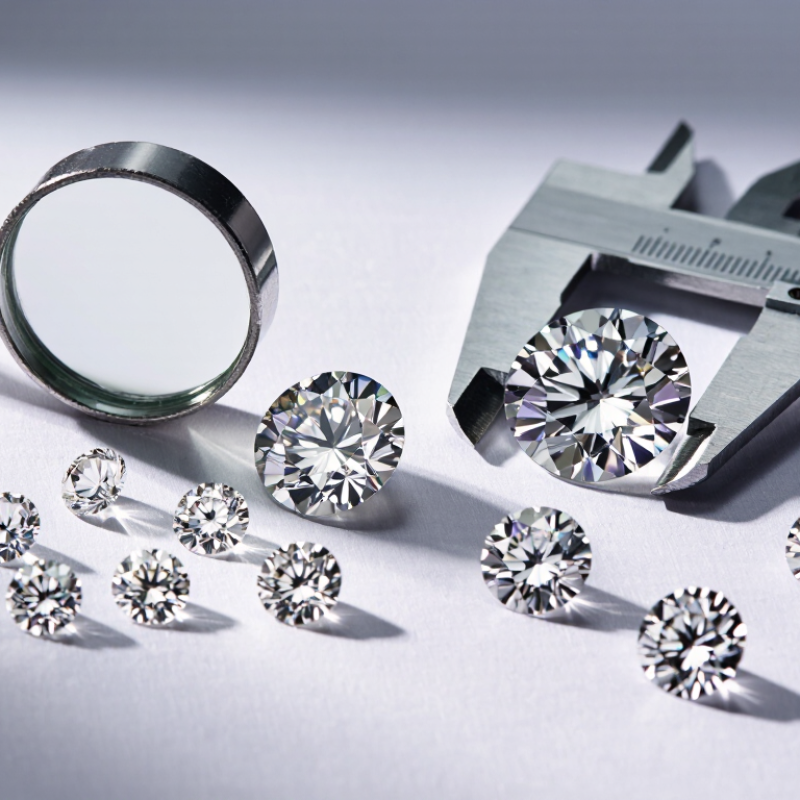
China Best How to Distinguish Cubic Zirconia and Moissanite?
Cubic zirconia and moissanite are popular diamond alternatives, but they are different gemstones. Cubic zirconia is a laboratory-created form of zirconium dioxide. It usually appears bright, clean, and very colorless. Its lower hardness makes it more vulnerable to scratches during daily wear.
Moissanite is made from silicon carbide and is also commonly produced in laboratories. It is harder and more durable than cubic zirconia. Under direct light, moissanite often shows strong rainbow flashes. Cubic zirconia usually gives softer white reflections. Moissanite also feels lighter than cubic zirconia of the same size because their densities differ. The comparison is not perfectly simple. Cut quality and lighting can change what your eyes see.
Tips: Do not rely only on sparkle. Check the stone under daylight and warm indoor light. A loupe may reveal different facet patterns, but beginners can misread them. Thermal testers may identify moissanite incorrectly because some devices respond to heat conductivity. A trained gemologist can examine the stone, mounting, and measurements together. Keep the result documented, especially when the stone has sentimental or financial value. һөкүмити
A comparison of common physical properties using representative midpoint values
The chart uses a relative comparison index with cubic zirconia set to 100. Moissanite is harder, has a higher refractive index, and shows stronger optical dispersion, while cubic zirconia is substantially denser.
Representative values: Mohs hardness—cubic zirconia 8.25, moissanite 9.25; refractive index—cubic zirconia 2.17, moissanite 2.67; dispersion—cubic zirconia 0.061, moissanite 0.104; density—cubic zirconia 5.8 g/cm³, moissanite 3.22 g/cm³.
Cubic zirconia and moissanite can look similar at first glance. Under direct LED light, both may appear bright and clean. Their light reflection reveals a stronger difference. Moissanite usually produces sharper flashes of rainbow color. These flashes can look like tiny red, blue, and green sparks. Cubic zirconia often gives softer white brilliance. Its rainbow fire is usually less intense.
Moissanite has higher refractive power and stronger dispersion than cubic zirconia. This helps it return more light through the crown. Tilt a loose stone slowly near a window. Moissanite may show lively, colorful flashes as it moves. Cubic zirconia can appear glassier, especially in larger sizes. However, cut quality changes the result. A poorly cut moissanite may look dull, while a well-cut cubic zirconia can look surprisingly bright. My first visual impression can still be wrong.
Tips: Use a clean stone and compare both under the same light. A 10x loupe may reveal double images in moissanite’s internal facets. Cubic zirconia normally shows single refraction. Do not rely on color flashes alone. Store lighting can exaggerate them. For a dependable identification, ask a qualified gemologist to examine the stone with professional testing equipment.
| Comparison Dimension | Cubic Zirconia (CZ) | Moissanite | Practical Identification Clue |
|---|---|---|---|
| Material Composition | Zirconium dioxide (ZrO₂), produced as a laboratory-created gemstone. | Silicon carbide (SiC), generally produced as a laboratory-created gemstone for jewelry. | The two stones are different materials even when their color and cut appear similar. |
| Refractive Index | Approximately 2.15–2.18. | Approximately 2.65–2.69. | Moissanite usually shows stronger brilliance because it bends and returns more light. |
| Dispersion | Approximately 0.058. | Approximately 0.104. | Moissanite commonly produces more noticeable rainbow-colored flashes, especially under spot lighting. |
| Light Reflection and Brilliance | Shows bright white reflections, but the overall light return is generally softer than moissanite when the cut quality is comparable. | Shows strong white brilliance with intense flashes caused by its higher refractive index and well-defined facet reflections. | Compare both stones under the same light and viewing angle; moissanite often appears more lively and reflective. |
| Fire or Rainbow Flashes | Usually moderate and less prominent. | Usually more pronounced, with visible spectral flashes when moved under direct or point-source lighting. | Strong rainbow flashes can suggest moissanite, although lighting, cut, and cleanliness also affect the effect. |
| Birefringence | Typically optically isotropic, so it does not normally show facet doubling. | Birefringence is approximately 0.043, which can cause facet doubling. | Viewed through the crown with magnification, rear facet edges may appear slightly doubled in moissanite. |
| Facet Appearance | Facet edges generally look single and relatively crisp when viewed straight through the stone. | Facet edges may look slightly doubled or less sharply separated because of birefringence. | Facet doubling is a useful clue, but it should be checked with proper magnification and lighting. |
| Optical Luster | Typically displays an adamantine to vitreous luster, depending on polish and cut. | Typically displays a strong adamantine luster with a particularly bright surface appearance. | Moissanite may look more glassy-brilliant, while CZ can appear comparatively softer after wear or surface abrasion. |
| Mohs Hardness | Approximately 8–8.5. | Approximately 9.25. | Moissanite is more resistant to scratching, but hardness alone is not a reliable visual identification method. |
| Density | Approximately 5.5–6.0 g/cm³. | Approximately 3.21 g/cm³. | For stones of the same size, CZ generally weighs more; accurate testing requires suitable equipment. |
| Thermal Conductivity | Low thermal conductivity compared with moissanite. | High thermal conductivity. | Thermal testers can help distinguish them, but a professional tester and correct testing method are recommended. |
| Color Appearance | Often appears colorless, but may show a warmer or slightly yellow, gray, or pink tone depending on the material and lighting. | Often appears near-colorless to colorless, although some stones may show a subtle gray, yellow, or greenish tint. | Color is not conclusive because both materials are available in several color grades and lighting changes perception. |
| Best Visual Check | Look for moderate fire, single facet edges, and comparatively softer light return. | Look for intense fire, strong brilliance, and possible facet doubling under magnification. | Use several observations together rather than relying on one visual characteristic. |
| Most Reliable Confirmation | Gemological testing using refractive index, thermal response, density, or spectroscopy. | Gemological testing using refractive index, thermal response, birefringence, density, or spectroscopy. | For valuable jewelry, professional gemological identification is more dependable than visual inspection alone. |
China Best How to Distinguish Cubic Zirconia and Moissanite?
Hardness offers a useful clue, but it is not a complete identification method. Cubic zirconia measures about 8–8.5 on the Mohs scale. Moissanite reaches approximately 9.25. In daily wear, both resist ordinary scratches. However, moissanite usually keeps sharper facet edges for longer. Avoid scratching the stones to test them. That can damage a setting or leave misleading marks.
Weight creates a clearer physical difference. Cubic zirconia is denser, with a specific gravity near 5.6–6.0. Moissanite is much lighter, usually around 3.2. For stones with identical measurements, cubic zirconia should feel noticeably heavier. A precision scale helps, but metal settings can affect the result. I once relied on hand-feel alone and judged too quickly. That was not professional enough. Durability also matters. Moissanite generally tolerates daily impact better, while cubic zirconia may develop surface abrasion or chips over time.
Tips: Compare stones of the same size before weighing them. Examine facet edges with a loupe under bright, neutral light. Look for worn corners, cloudy abrasion, or unusual doubling of facet lines. These signs can guide an inspection, but they cannot replace proper gem-testing equipment. A thermal or electrical tester may help, yet some instruments require correct calibration. When the result matters, consult an experienced gemologist with documented testing methods.
Simple tests can reveal important differences. GIA’s published gemological data places moissanite’s refractive index around 2.65–2.69. Cubic zirconia measures about 2.15–2.18. Under a loupe, moissanite often shows doubled facet edges because it is doubly refractive. Cubic zirconia usually shows single, sharper edges. Look through the stone from the side, not only from above. This test needs steady lighting and patience.
Weight also provides a useful clue. GIA reference data lists cubic zirconia’s specific gravity near 5.6–6.0. Moissanite is much lighter, near 3.21–3.22. Two stones with similar diameter may feel noticeably different on a precision scale. Moissanite also has stronger fire. Its reported dispersion is about 0.104, while cubic zirconia is near 0.058. Bright rainbow flashes can appear in direct sunlight. Still, lighting can exaggerate this effect.
Tips: Use a 10x loupe, a clean scale, and a neutral white light. Thermal testers may separate them, but inexpensive models can misread stones. A scratch test is not recommended because it can damage the setting or surface. I have found visual clues helpful, but none is perfect alone. For valuable jewelry, an independent gemological report remains the safer choice. Even experienced observers can mistake a well-cut stone.
Choosing between cubic zirconia and moissanite depends on your budget, wearing habits, and preferred sparkle. Cubic zirconia offers a bright, clean appearance at a lower cost. However, it is softer, measuring about 8 to 8.5 on the Mohs scale. Daily wear can cause scratches, especially on rings.
Moissanite is harder, reaching about 9.25, so it suits active lifestyles and frequent use. Its light performance is stronger, with noticeable flashes of rainbow color. Some people love this lively effect. Others prefer the calmer look of cubic zirconia. Moissanite may also show slight gray or yellow tones, depending on its quality and size. Examine it under daylight before deciding.
Think about maintenance, too. Cubic zirconia may lose clarity sooner when exposed to dust, cosmetics, and repeated friction. Moissanite usually keeps its brilliance longer, but it costs more. A well-made setting still matters. Poor alignment can make either stone look less attractive.
Do not choose by sparkle alone. Hold both stones beside your skin and compare their reflections. I once assumed the brighter stone would look more elegant, but personal style changed that judgment. There is no perfect choice. Your daily routine, budget, and tolerance for maintenance should guide the decision.
Cubic zirconia is laboratory-created zirconium dioxide. Moissanite is laboratory-created silicon carbide. Moissanite is harder and usually more durable.
Moissanite often shows strong rainbow flashes under direct light. Cubic zirconia usually produces softer white reflections. Lighting changes the result.
Yes. Compare each stone under daylight and warm indoor light. Observe white reflections, rainbow flashes, and overall clarity. Do not rely on sparkle alone.
Cubic zirconia measures about 8–8.5 on the Mohs scale. Moissanite measures approximately 9.25. Avoid scratching either stone as a test.
Cubic zirconia is denser than moissanite. Stones with identical measurements should make cubic zirconia feel noticeably heavier. Hand-feel alone can mislead.
Weigh stones with matching measurements. Remove metal settings when possible, because mountings affect the reading. A scale gives better evidence than guessing by hand.
A loupe may reveal different facet patterns or doubled facet lines. Worn corners and cloudy abrasion can suggest surface damage. Beginners may misread these details.
Thermal testers can help, but some devices may respond incorrectly to heat conductivity. Calibration and correct use matter. The result is not always conclusive.
Seek an experienced gemologist when the stone has financial or sentimental value. They can examine measurements, mounting, and testing results together. Keep the findings documented.
Cubic zirconia and moissanite are popular diamond alternatives, but they differ in composition, appearance, and performance. Cubic zirconia is a synthetic gemstone known for its bright, glass-like sparkle, while moissanite produces stronger rainbow flashes and often appears more lively under direct light. Understanding these differences is essential when learning How to distinguish between cubic zirconia and moissanite.
The two stones also vary in hardness, weight, and long-term durability. Moissanite is generally harder, lighter, and more resistant to scratches than cubic zirconia. Simple comparisons can include observing the pattern of light reflection, checking the stone’s weight, using a loupe to examine its facets, and consulting a qualified jeweler for professional testing. When choosing between them, consider your budget, desired brilliance, everyday wear, and maintenance expectations. Cubic zirconia may suit occasional or affordable jewelry, while moissanite can be a practical choice for lasting daily use.
