What Are the Top Durable Chains for Everyday Wear in 2026?

Time:2026-11-05 Author:Sienna
0%

“What Are the Top Durable Chains for Everyday Wear in 2026?” starts with a practical question: which chain can handle a commute, a desk job, and an occasional snag on a sweater? What are the most durable chains for everyday wear depends on more than metal choice. Link shape, thickness, clasp strength, and how a chain sits against the body all matter. A sturdy-looking chain can still fail at a weak clasp. Small details count.

Gemologist and jewelry author Antoinette Matlins has written consumer guidance on making informed jewelry choices. A fair paraphrase of that approach is: “Judge the whole piece, not just its material.” That principle guides this overview. Solid gold, platinum, and well-made stainless steel can each suit daily use, but no material makes every chain snag-proof or maintenance-free. The feel of a curb link differs from a fine cable chain; a tight, even weave may resist deformation better than delicate open links. Still, real wear is messy. A chain worn to sleep or exercise may need more checks, whatever its price. We’ll compare common chain styles, explain what to inspect at the clasp and links, and note where durability claims need a closer look. Choose with care. A small amount of wear can reveal more than a polished product photo.
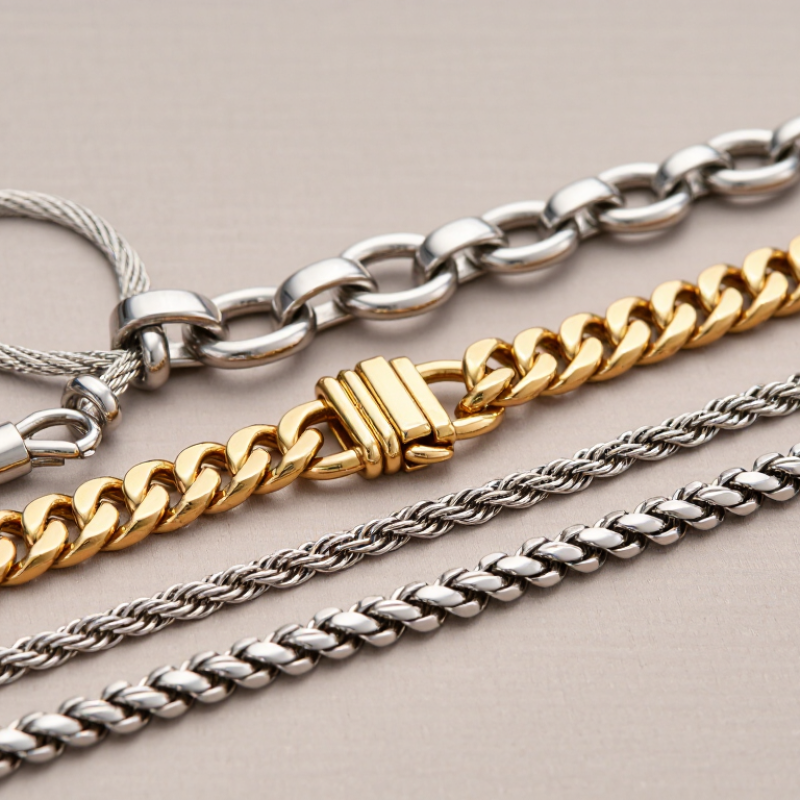
What Are the Top Durable Chains for Everyday Wear in 2026?

What Durability Means in an Everyday Chain

Durability in an everyday chain is more than resisting scratches. It means the links, joints, and clasp can handle repeated movement without opening, bending, or wearing unevenly. A chain rubs against collars, swings with each step, and may catch briefly on a bag strap. Small stresses, repeated daily.

The Gemological Institute of America’s Mohs hardness reference places gold and silver around 2.5–3, and platinum around 4–4.5. Mohs measures scratch resistance, not a chain’s breaking strength, so it cannot rank complete chains by toughness. Link construction matters: tightly formed links and soundly joined seams can help, while a tiny, weak clasp may become the first failure point. That detail is easy to overlook.

Moisture and perspiration matter, too. ISO 9227 describes controlled salt-spray corrosion testing, but laboratory exposure does not perfectly predict years of skin contact. For practical wear, inspect clasp alignment and link gaps periodically; look for thinning near the clasp, where movement concentrates. A little imperfect judgment is unavoidable: two chains made from similar metals can age differently because their thickness, finish, and construction differ.

How Chain Materials Affect Strength and Wear

Chain strength comes from both the metal and the links. A thick chain can still fail at a narrow clasp or poorly joined link. Stainless steel resists everyday scratching better than softer precious-metal alloys, while sterling silver is easier to reshape and repair. Gold’s wear resistance depends on karat and alloy mix; higher-purity gold is generally softer. No material is wear-proof.

ASTM A240/A240M specifies a minimum tensile strength of 485 MPa for 316L stainless steel plate. That figure describes tested material, not a finished chain’s lifetime: link size, weld quality, and repeated bending matter too. Silver and gold alloys also vary with composition and processing, so comparisons without matching test conditions can mislead. I’d inspect the clasp and link joints before trusting a chain’s label.

Tips: For daily wear, choose smooth, sturdy links and a secure clasp. Remove the chain before strenuous activity, and check for bent links regularly. Small checks help. A fine chain may look elegant, but I wouldn’t assume it can take constant pulling.

How Chain Designs Handle Daily Stress

Everyday chain failure often begins at a small point: a clasp, a soldered joint, or a link repeatedly bent near the neck. Curb and cable links can flex naturally, while box links distribute movement across flatter surfaces. Neither design is automatically stronger. Tight, smooth connections resist snagging on knitwear, but thin links may still deform under a sudden pull. Small joints matter.

Material figures need context. ASTM A240/A240M lists a minimum tensile strength of 485 MPa for 316L stainless-steel sheet. That is a material specification, not a durability rating for a finished chain; link thickness, forming, and weld quality change the result. For gold alloys, purity alone also cannot predict wear resistance. Ask whether the clasp and connecting rings are made to match the chain, and inspect them for gaps or rough edges. A simple tug test is not enough. Honestly, no design is immune to repeated snags. Remove a chain before exercise or sleep, and check for stretched links every few weeks.

What Are the Top Durable Chains for Everyday Wear in 2026?

How chain designs handle everyday stress: a qualitative comparison of common link styles.

How to read this: Ratings are relative design-based tendencies, not standardized strength-test results. Actual durability also depends on the metal, link thickness, workmanship, and wear.

Comparing Durable Chain Types for 2026

For everyday wear in 2026, chain construction matters as much as metal. Cable chains are light and easy to repair, but thin links can stretch under repeated pulling. Curb chains lie flat and resist twisting; thicker links usually handle daily movement better. Rope chains look substantial, though dirt can collect between their tightly woven links. Box chains have a neat profile, but a damaged link may be harder to repair cleanly. No chain is indestructible. Even a sturdy clasp can fail.

Material changes the trade-off. Solid gold resists tarnish, while sterling silver is more affordable but needs regular polishing. Stainless steel is often practical for frequent wear, yet repairs may be less straightforward. The World Gold Council’s Gold Demand Trends 2024 reported global gold jewellery demand of 2,093 tonnes in 2023. That figure reflects the wider jewellery market, not chain durability, so it cannot identify a “best” design. For a real comparison, check link thickness, clasp quality, and repair options—not appearance alone.

Tips: Match chain weight to its pendant, and remove it before sleeping or exercise. Wipe links with a soft cloth after wear. Check the clasp and connecting rings every few weeks; small gaps are easy to miss.

What Are the Top Durable Chains for Everyday Wear in 2026? — Comparing Durable Chain Types for 2026

Chain Type Typical Durability Everyday-Wear Strengths Potential Weak Points Care and Buying Tips
Curb High Interlocking, flattened links tend to lie close to the body and are less likely to snag than many open-link styles. Thin or hollow links can still bend, flatten, or break under repeated pulling. For frequent wear, choose a well-made solid-link version and check that the clasp and end rings are secure.
Wheat (Spiga) High Its tightly woven links create a flexible chain with a substantial feel and relatively few exposed gaps. Dense construction can make repairs more involved; fine versions may kink if sharply bent. Store it loosely rather than folded into tight bends, and inspect the clasp regularly.
Box Moderate to high Square links give the chain a clean profile and can resist ordinary wear when made with sturdy, solid links. Small links may kink or separate after a sharp bend or forceful snag. Choose a thickness suited to the pendant, if any, and avoid pulling a kink straight by force.
Rope Moderate to high Multiple intertwined strands create a textured look and can make a well-constructed chain feel substantial. Fine or hollow rope chains can be difficult to repair cleanly; twisting and sharp bends may damage the weave. Remove it before strenuous activity and store it flat or loosely coiled to reduce tangling.
Cable (Link) Moderate Its simple, widely used link construction is straightforward to inspect and often easier to repair than intricate weaves. Thin links can stretch or break, especially when carrying a heavy pendant or catching on clothing. Match link thickness to the pendant’s weight and check for stretched or misshapen links over time.
Figaro Moderate Alternating link lengths create a distinctive pattern; sturdier versions can work well for regular wear. The smaller connecting links may be more vulnerable to wear or catching, depending on link size and construction. Look for consistent, securely joined links and avoid choosing a very fine chain for a heavy pendant.
Snake Low to moderate Smooth, closely connected segments create a sleek profile that is comfortable against the skin. It can kink when sharply bent, and a damaged segment may be difficult to restore to its original shape. Handle gently, store flat, and remove before sleep or activities that could bend or snag it.

How to read the ratings: These are general comparisons of chain construction, not laboratory ratings. Actual durability depends on link thickness, solid versus hollow construction, material, clasp quality, workmanship, pendant weight, and how the chain is worn. No chain is immune to damage from pulling, snagging, or sharp bending.

How to Choose and Maintain a Chain for Everyday Use

For everyday wear, choose a chain by checking its metal, link construction, and clasp—not just its shine. Solid gold, platinum, and sterling silver are common options; plated finishes can wear through where links rub. A hollow chain may feel light but can dent more easily than a solid one. Look closely at the clasp and the small rings beside it, where repeated tugging often causes trouble. The Silver Institute’s World Silver Survey 2024 estimated silver-jewelry fabrication at 234.1 million ounces in 2023, up 6%. That signals broad use, not a guarantee that every silver chain suits daily wear.

Tips: Match the chain’s thickness to your routine. Remove it before workouts, swimming, or sleep, and wipe it with a soft cloth after wearing. For cleaning, use lukewarm water, mild soap, and a soft brush; dry the links fully. Check for kinks, thinning links, or a loose clasp every few weeks.

Fit matters. A chain that catches on collars or twists under a shirt will face more friction, whatever its metal. Store it flat or loosely coiled, rather than knotted in a drawer. If a link looks stretched, stop wearing it until a jeweler checks it. Even careful maintenance cannot prevent every snag; that is an easy detail to underestimate.

FAQS

Which chain style handles everyday movement well?

Curb chains lie flat and resist twisting. Cable chains flex naturally and are often easier to repair. Thickness still matters.

Are box chains stronger than cable chains?

Not automatically. Box links spread movement across flatter surfaces, but a damaged link can be harder to repair neatly.

Where do chain failures often begin?

Check the clasp, soldered joints, and small connecting rings. Tiny gaps or rough edges can become weak points.

Does a chain’s metal guarantee durability?

No. Link thickness, construction, and clasp quality matter too. Metal alone cannot tell the whole story.

What should I check before choosing a chain?

Look for solid, even links and a secure clasp. Match the chain’s weight to its pendant and daily routine.

How should I clean and store a chain?

Use lukewarm water, mild soap, and a soft brush. Dry it fully. Store it flat or loosely coiled.

When should I take a chain off?

Remove it before exercise, swimming, or sleep. Collars and shirts can also catch or twist a chain. Easy to overlook.

What should I do if a link looks stretched?

Stop wearing the chain and have the link checked by a jeweler. A quick tug test is not enough.

Conclusion

Choosing an everyday chain means balancing strength, comfort, and resistance to wear. What are the most durable chains for everyday wear depends on both the material and the construction: sturdy metals can resist bending and corrosion, while well-made links distribute tension and are less likely to snag or separate. Chain styles with compact, closely connected links often cope well with regular movement, though flexibility, weight, and ease of repair also matter. No design is completely immune to damage, so the best option is one suited to your routine and how you plan to wear it.

Before choosing, consider the chain’s thickness, clasp security, comfort, and the conditions it may encounter each day. Regularly check for stretched links, loose connections, or a worn clasp, and clean the chain gently with a method appropriate for its material. Storing it separately when not in use can help prevent tangling and scratches. These simple habits can extend a chain’s useful life and keep it comfortable for everyday wear.

Sienna

Sienna

Sienna is a skilled marketing professional with a deep expertise in our company’s core products and services. With a passion for innovation and detail, she plays a pivotal role in crafting insightful blog posts that not only highlight the unique features of our offerings but also provide valuable......